


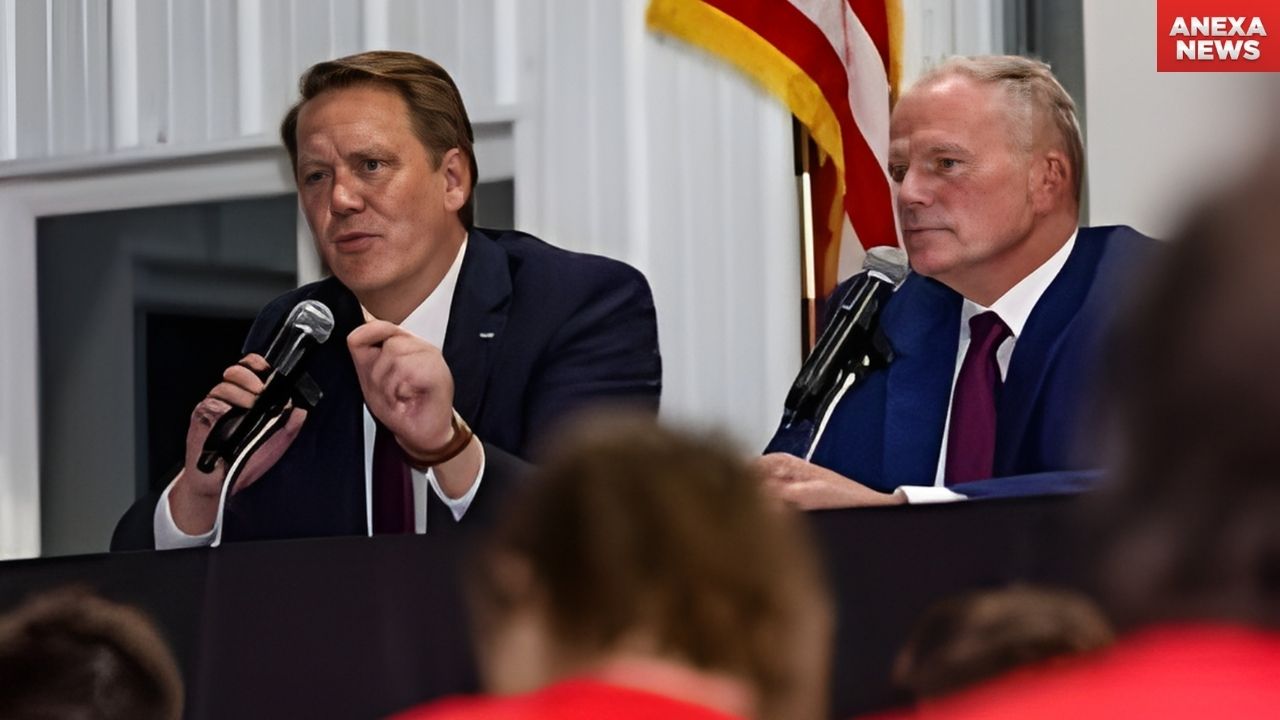
In a fiery and policy-charged debate this week, Michigan’s Republican gubernatorial candidates outlined their vision for the state’s economic revival and public safety reforms. The Michigan GOP Governor Debate, held on Wednesday night in Sparta, focused heavily on two themes — eliminating what they called the “tax on work” and deploying the National Guard to support law enforcement in Detroit.
The event marked the first major debate of the 2026 election cycle, signaling the start of an intense race to unseat Democrats and reclaim the governor’s mansion. Six of the seven declared GOP candidates appeared on stage, with notable absentee John James, whose absence drew both criticism and speculation.
Ending the “Tax on Work” Becomes Central Campaign Promise
A unifying theme across the debate was the call to end Michigan’s so-called “tax on work.” Candidates used the term to describe income taxes, payroll deductions, and taxes on overtime or tips — which they argue unfairly penalize working-class Michiganders.
“Michigan should reward work, not tax it,” said one leading contender. “Every hour of overtime, every tip earned should stay in the worker’s pocket.”
Candidates proposed abolishing or reducing state income taxes, removing taxes on overtime and tips, and creating tax exemptions for hourly workers.
They argued these changes would boost disposable income, encourage labor participation, and help small businesses attract and retain employees amid ongoing inflation and labor shortages.
Economists and analysts note that while these proposals appeal to voters frustrated with rising costs, they raise significant budgetary questions about replacing lost revenue. Michigan’s state income tax contributes billions to education, infrastructure, and healthcare — funds that would need alternative sources if the tax is repealed.
Still, the “tax on work” slogan resonated as a populist rallying cry — one that may define the Republican primary’s economic messaging.
National Guard Deployment in Detroit: A Bold Law-and-Order Proposal
Another major talking point was crime and public safety, specifically the potential use of the Michigan National Guard to assist Detroit police. Several candidates said they would support a limited Guard deployment to combat violent crime, drug trafficking, and gang activity in high-risk neighborhoods.
“If Detroit can’t control crime, the state must step in,” one candidate said. “We need boots on the ground to protect Michigan families.”
The proposal mirrors comments made earlier this year by Vice President J.D. Vance, who said he would consider authorizing National Guard support in Detroit if requested by the state. Candidates framed the Guard as a temporary stabilizing force, not a replacement for local law enforcement, emphasizing the need to “restore order” and “support the men and women on the front lines.”
Critics argue that such deployments risk escalating tensions and could strain state resources. But supporters see it as a symbol of strength and accountability, positioning Republicans as the party of safety and security — a strategy likely aimed at suburban and rural voters who feel crime is worsening in urban centers.
Candidates Target State Bureaucracy and Economic Development Agencies
Beyond taxes and crime, many participants attacked what they called “bloated bureaucracy” in Lansing, specifically vowing to dismantle or reform the Michigan Economic Development Corporation (MEDC).
The MEDC, responsible for attracting investment and jobs, was portrayed by some candidates as a “corporate welfare machine” that picks winners and losers instead of fostering fair competition.
“We don’t need bureaucrats handing out taxpayer dollars to their friends,” one contender said. “We need policies that empower small businesses and workers directly.”
This anti-establishment tone reflects a broader conservative push in Michigan — one focused on shrinking government, cutting red tape, and redirecting funds toward local communities rather than large corporations.
A Divided Field United by Common Themes
While policy details varied, the Michigan GOP field appeared united on three issues:
- Tax relief for working families.
- Law-and-order policies, including National Guard support.
- Government reform and accountability.
Despite their unity in message, the candidates differed on implementation. Some proposed phasing out income taxes over five years; others favored an immediate repeal coupled with spending cuts.
Several debated whether to replace lost revenue through consumption taxes or by closing tax loopholes for large corporations.
Moderators pressed the field for specifics, but most candidates avoided granular details, instead returning to their key talking points about freedom, fairness, and fiscal discipline.
What’s at Stake for Michigan
The 2026 Michigan governor’s race is expected to be one of the most closely watched contests in the Midwest. With Democratic Governor Gretchen Whitmer completing her final term, both parties see an opening to redefine Michigan’s political direction.
For Republicans, winning the governorship means reversing Democratic gains on climate policy, union support, and infrastructure spending. For voters, it raises pivotal questions about the balance between tax cuts and essential services, and between public safety and civil liberties.
Analysts say the “tax on work” proposal could be a powerful campaign message, particularly among working-class voters in metro Detroit, Grand Rapids, and the Upper Peninsula. However, the financial feasibility of cutting major revenue sources remains a looming challenge.
Similarly, using the National Guard in Detroit could appeal to voters who prioritize safety — but it risks backlash if seen as overreach or political theater.
National Implications
The Michigan debate also reflects a national Republican strategy heading into 2026 and 2028.
Themes such as “tax relief for workers,” “fighting inflation,” and “restoring order in cities” are echoing across GOP campaigns nationwide — from Ohio to Georgia.
Michigan, as a swing state with a mix of industrial, rural, and urban populations, serves as a testing ground for these ideas. If the “tax on work” narrative gains traction here, it could shape Republican messaging in other battleground states.
The Road Ahead
As the Michigan GOP Governor Debate concluded, one takeaway was clear: the party is positioning itself as the champion of the working class, the defender of law enforcement, and the opponent of big government.
The next few months will test how these candidates translate slogans into actionable policy plans — and whether their ideas can win over a broader electorate beyond the Republican base. Voters will be watching closely for details on:
- How tax cuts will be financed without slashing education or infrastructure budgets.
- How a National Guard deployment would operate under state law.
- How Michigan’s economy can grow without relying on subsidies or high taxation.
The debate may have raised more questions than answers, but it successfully set the tone for a high-stakes race — one that could redefine Michigan’s fiscal and political future.
Conclusion
The Michigan GOP Governor Debate showcased a confident, aggressive Republican field promising sweeping changes in taxation and law enforcement. Their calls to eliminate the “tax on work” and consider National Guard intervention in Detroit underline the party’s dual focus on economic freedom and public safety.
Whether these proposals can translate into viable policies — and win over independents in a divided state — will determine not only Michigan’s next governor but possibly the direction of GOP politics in the Midwest for years to come.